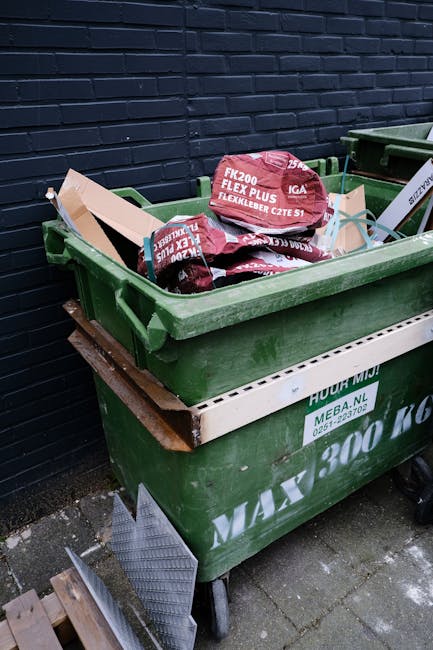
Tottenham business waste solutions for shops and offices
If you run a shop, office, studio, cafe, or small commercial unit in Tottenham, waste has a habit of building up faster than you expect. One minute it is a few cardboard boxes and a broken shelf; the next, there are bin bags in the back room, old packaging by the loading door, and paperwork that needs shredding before it leaves the building. That is exactly where Tottenham business waste solutions for shops and offices come in.
This guide breaks down what those solutions actually cover, how they work in practice, what to look for, and how to keep things tidy, legal, and cost-conscious without making your day harder. To be fair, most businesses do not need a grand waste strategy. They need a reliable, sensible setup that works on a Tuesday morning when deliveries are late and the stockroom is already full.
Along the way, you will see practical examples, a comparison table, a checklist, and a few things people often overlook until a problem appears. If you are weighing up your options, you may also find it useful to review the provider's background and approach, the recycling and sustainability guidance, and the pricing and quotes information before making a decision.
Table of Contents
- Why Tottenham business waste solutions for shops and offices matters
- How Tottenham business waste solutions for shops and offices works
- Key benefits and practical advantages
- Who this is for and when it makes sense
- Step-by-step guidance
- Expert tips for better results
- Common mistakes to avoid
- Tools, resources and recommendations
- Law, compliance, standards, and best practice
- Options, methods, and comparison table
- Case study or real-world example
- Practical checklist
- Conclusion
- Frequently asked questions
Why Tottenham business waste solutions for shops and offices matters
Waste management is easy to treat as background noise until it starts causing friction. In shops, it shows up as overflowing packaging, damaged stock, food waste, or awkward storage in customer-facing areas. In offices, it often looks like paper clutter, obsolete furniture, old IT equipment, and mixed rubbish piling up in a corner no one wants to admit exists.
In Tottenham, where commercial spaces can be compact and access can be tight, a poor waste setup can quickly become more than an inconvenience. It can affect hygiene, staff morale, customer impressions, and even day-to-day efficiency. If a team has to keep stepping around boxes or move waste twice because the collection system is clumsy, you lose time in little drips and drabs. Those drips add up.
There is also the trust factor. A tidy back-of-house area tells staff and visitors that the business is organised. A messy one says the opposite. Let's face it, nobody wants customers seeing a pile of flattened cartons beside the mop bucket.
Done properly, business waste solutions do three things at once:
- keep your premises cleaner and safer
- make recycling simpler and more consistent
- reduce the stress of dealing with bulky or awkward waste
That balance matters whether you are running a busy high-street shop, a small office above a parade of units, or a mixed-use workspace with regular clear-outs. And because every site is a bit different, the best answer is rarely one-size-fits-all.
How Tottenham business waste solutions for shops and offices works
At a practical level, business waste support usually starts with understanding what your site produces and how often it builds up. A shop might generate more cardboard, shrink wrap, and old display material. An office may create paper waste, packaging from deliveries, kitchen waste, confidential documents, and furniture disposal needs from time to time.
The process is normally straightforward:
- Assess the waste streams - identify what you throw away, how much, and how often.
- Separate materials - keep recyclables, general waste, and any specialist waste apart where possible.
- Schedule removal - arrange collections or clearances at a frequency that suits your trading hours.
- Handle bulky or one-off items - remove old desks, shelving, cabinets, or stockroom clutter safely.
- Document and review - keep records where needed and adjust the setup if volumes change.
That sounds simple, and mostly it is. The real value comes from getting the details right. For example, a retail store receiving multiple weekly deliveries may need more cardboard removal than mixed waste collection. An office with hybrid working might need less day-to-day waste handling, but more occasional clear-outs when old equipment or archived files need to go.
A good provider should help you choose a practical setup rather than forcing you into an overly rigid model. If you want to check the operational side, pages such as health and safety policy and insurance and safety information help set expectations around how work is managed responsibly.
And yes, timing matters. A collection that lands during your busiest delivery window can cause more trouble than it solves. The best systems work around your day, not against it.
Key benefits and practical advantages
People usually think of waste solutions as a cost, but the best ones save hassle in ways that are easy to miss. The obvious benefit is the removal of waste. The less obvious benefit is the time and attention you get back.
Here are the main advantages for shops and offices in Tottenham:
- Better space use - stockrooms, rear corridors, and office corners stay usable.
- Cleaner presentation - customers and clients see a well-run business, not a storage problem.
- Fewer safety issues - loose packaging, stacked items, and blocked walkways are reduced.
- More predictable routines - waste stops being a last-minute scramble.
- Improved recycling habits - staff can separate materials more easily when the system is clear.
- Lower disruption - the right collection or clearance plan supports trading rather than interrupting it.
There is a quieter, human benefit too. Staff tend to work better in spaces that feel under control. Nobody loves a cluttered back room at 4:45 p.m. on a wet London afternoon. Small thing, maybe. But it changes the mood.
Expert summary: the best business waste solution is not the one with the biggest promise; it is the one that fits your site, your trading hours, and your real waste patterns without creating extra admin.
For businesses focused on long-term housekeeping and lower environmental impact, it is worth reading the recycling and sustainability guidance alongside the rest of your planning. That gives you a more rounded picture of how to keep waste handling sensible and responsible.
Who this is for and when it makes sense
This kind of support is relevant to a broader mix of businesses than people sometimes realise. It is not just about large offices or retail chains. In fact, smaller premises often feel the pressure more sharply because there is less space to absorb mistakes.
You are likely to benefit if you run:
- a high-street shop with regular packaging waste
- an office with old furniture, archive boxes, or frequent equipment updates
- a salon, clinic, studio, or agency with limited back-of-house space
- a small retail unit that receives stock deliveries several times a week
- a business preparing for a move, refurbishment, or end-of-lease clear-out
It also makes sense when your internal team is doing too much improvised lifting, bagging, stacking, and sorting. If a couple of employees are spending part of every week moving rubbish around instead of doing their actual jobs, the system is already inefficient.
Sometimes the trigger is practical rather than strategic. A new manager arrives and notices the waste arrangement has become a habit rather than a plan. Or a fire exit starts to narrow because boxes have taken over a corner. That is usually the moment people realise they need a more robust setup.
If you are not sure where to start, a first conversation through the contact page can help you understand what sort of solution fits your premises and timescale. No drama. Just clarity.
Step-by-step guidance
A sensible waste process is usually built in layers. Here is a practical way to think about it.
1. Walk the site with fresh eyes
Start by looking at where waste is actually created: tills, stockrooms, kitchenettes, printer areas, server cupboards, reception, and storage corners. You will often spot bottlenecks immediately. A bin is too small. A recycling point is too far away. A pile of cardboard is living by the wrong door.
2. Separate waste by type
Keep the main streams clear: mixed waste, cardboard and paper, food waste where relevant, electrical items, furniture, and confidential materials. The more mixed everything gets, the less efficient the system becomes. It sounds obvious, but mixed waste is where good intentions go to die, gently and quietly.
3. Decide what happens daily and what happens occasionally
Some waste needs routine handling. Some is occasional. Cardboard from deliveries may need frequent removal, while broken chairs or out-of-date filing cabinets can wait for a scheduled clearance. Keeping those categories separate saves money and avoids overcomplicating the daily routine.
4. Match the collection method to your access
In Tottenham, access can be a real factor. Narrow entrances, upstairs offices, shared yards, and limited parking all change how waste should be removed. The right method should fit the building, not force the building to fit the method.
5. Build a simple internal routine
Assign who clears bins, who logs bulky items, and who approves one-off removals. It does not have to be fancy. A clear routine beats a sophisticated one that nobody follows.
6. Review and adjust
Waste volumes change with seasons, promotions, staff levels, and refurbishments. A shop during Christmas needs a different rhythm from the same shop in February. An office after a move may need several loads in one week, then very little for months. Review the setup regularly.
That is the practical version. No mystery, just method.
Expert tips for better results
After working through many business spaces, a few patterns become clear. The better setups are not always the most expensive. They are the most organised.
- Put recycling where people actually work - if staff have to walk too far, items end up in the wrong bin.
- Flatten cardboard early - this one tiny habit can free up a surprising amount of space.
- Label bins clearly - use plain language, not jargon. "Paper only" beats "recovered fibre stream", every time.
- Separate confidential waste at source - do not let private papers sit in open recycling containers.
- Book bulky removals before the room becomes unmanageable - once items start blocking access, the job gets slower and more awkward.
- Think about opening hours - early morning or after-hours collections often cause less disruption.
One thing I often see: businesses wait until the back room is effectively a puzzle made of boxes. By then, every movement is awkward. A better habit is to treat waste removal as part of operations, not a clean-up emergency. A little boring, perhaps. Very effective, though.
If you value a provider that takes this sort of practical, no-fuss approach seriously, it is worth checking the company's about us page to understand the working style and priorities behind the service.
Common mistakes to avoid
Most waste problems are not caused by one huge failure. They come from a handful of small mistakes that keep repeating.
- Waiting too long to clear surplus items - clutter builds quietly, then suddenly becomes a problem.
- Using one bin for everything - mixed waste is harder to manage and often more expensive to handle.
- Ignoring access issues - if a collection van cannot park nearby, the process gets slower and less efficient.
- Not protecting confidential material - office waste can include sensitive data, not just paper.
- Assuming all waste is the same - it is not. Cardboard, furniture, electronics, and general rubbish behave differently.
- Forgetting the staff side - if the team does not understand the system, it will drift off course.
There is also a commercial mistake that is easy to miss: choosing a solution purely on headline cost. Cheap can be fine. Cheap and badly fitted is not fine. It often ends up costing more in time, rework, and frustration.
That is where useful commercial information helps. Reviewing pricing and quote details can make the differences between services much easier to compare, especially when you are looking beyond the initial number.
Tools, resources and recommendations
You do not need specialist software to manage business waste well, but a few simple tools make the job easier.
- Waste log or simple spreadsheet - useful for tracking bulky removals and recurring waste spikes.
- Colour-coded labels - helps staff separate cardboard, mixed waste, and confidential paper.
- Designated storage area - even a modest, tidy space for temporary holding can improve the whole system.
- Internal checklist - ideal for weekly checks in stockrooms, kitchens, and print areas.
- Collection calendar - prevents missed removals and last-minute panic.
For many businesses, the smartest resource is not a tool at all but a clear service partner who can handle the removals without overcomplicating things. If you want to understand the operational and service side in more depth, the site's main homepage is a sensible starting point for orientation, while the sustainability page helps with environmentally conscious planning.
It may also help to keep internal trust and admin details close at hand. Pages like terms and conditions, payment and security, and complaints procedure are useful when you want to understand how a provider handles the practicalities. Not glamorous reading, admittedly, but useful.
Law, compliance, standards, and best practice
Waste handling for businesses in the UK sits within a framework of legal and practical expectations, so it is wise to take it seriously. You do not need to become a compliance expert overnight, but you do need a setup that is responsible and well managed.
For shops and offices, the main common-sense principles are:
- Keep waste secure and controlled so it does not create hazards or nuisance.
- Separate recyclable and non-recyclable materials where practical.
- Handle confidential waste carefully to protect private information.
- Store waste safely so walkways, exits, and shared spaces remain clear.
- Use insured, competent providers for collections and clearances.
Best practice also means thinking about the people doing the work. Manual handling, awkward lifts, sharp edges, broken furniture, and heavy bags can all cause avoidable injury if the process is sloppy. That is why a provider's health and safety approach matters. If a job sounds simple but involves lifting down narrow stairs, the risks are not trivial.
Businesses also have a reputation to protect. Illegal dumping, careless handling, or poor paperwork can create avoidable headaches. A dependable waste arrangement reduces that risk. It is not just about being tidy; it is about acting like a business that knows what it is doing.
If compliance and responsibility are high on your list, the pages on health and safety policy, insurance and safety, and modern slavery statement can help build trust around how the service is run.
Options, methods, and comparison table
There are a few ways to handle waste in a shop or office. The right one depends on how much waste you generate, how often it changes, and whether you need a routine service or a one-off clearance. Here is a simple comparison.
| Method | Best for | Strengths | Things to watch |
|---|---|---|---|
| Regular waste collections | Ongoing shop or office waste | Predictable, routine, easy to budget for | Can become inefficient if volumes change but the schedule does not |
| One-off bulky clearance | Old desks, shelving, fixtures, and end-of-project waste | Fast, removes large items in one visit | Needs clear access and accurate planning |
| Mixed waste only | Low-volume sites with limited storage | Simple to manage | Less efficient for recycling and may be less tidy |
| Separated recycling streams | Businesses producing regular cardboard, paper, and packaging waste | Better sorting, cleaner storage, often more organised overall | Needs staff cooperation and clear labels |
For many Tottenham shops and offices, the strongest setup is a mix of routine waste handling plus occasional clearances for bulky items. That keeps the day-to-day simple and avoids the dreaded "we'll deal with it later" pile that always seems to grow legs.
Case study or real-world example
Picture a small office above a retail parade in Tottenham. The team works three days a week in person, with deliveries arriving almost daily. Over time, cardboard starts collecting near the back stairwell. There are also old office chairs, a printer that no longer works, and several archive boxes that need proper disposal. Nothing dramatic. Just the usual slow build-up.
At first, staff move items around when they get in the way. Then the storage corner becomes a permanent holding zone. Then the cleaner has to work around it. Soon enough, the office manager realises the arrangement is costing time every week. Not a huge amount, but enough to be annoying. Enough to notice.
The fix is not complicated:
- separate cardboard from general waste
- set a weekly review for the storage corner
- arrange a one-off removal for bulky furniture and obsolete equipment
- create a clear process for future archive and confidential disposal
After that, the space feels lighter. The stairwell is clear. Staff stop stepping over boxes. The office manager stops spending Friday afternoons playing waste Tetris, which frankly nobody enjoys.
This is a typical pattern in compact commercial spaces: the solution is less about one big intervention and more about resetting habits. Once the system becomes simple, people follow it. Usually.
Practical checklist
Use this checklist to sense-check your current setup or prepare for a new waste arrangement.
- Have you identified the main waste streams in the shop or office?
- Are recycling and general waste kept separate where practical?
- Do staff know where each type of waste should go?
- Is there a safe, tidy storage point for bags, boxes, and bulky items?
- Are access routes kept clear for collections and staff movement?
- Do you have a plan for confidential papers and old electronics?
- Have you reviewed how often waste actually builds up?
- Does the collection schedule match your opening hours and deliveries?
- Are you using a provider with sensible safety and insurance standards?
- Have you checked whether a one-off clearance would be useful before the next busy period?
If you can answer "no" to several of those, that is fine. It just means there is room to improve. And usually, there is. A small adjustment can make the whole place feel calmer.
Get a free quote today and see how much you can save.
Conclusion
Tottenham business waste solutions for shops and offices are really about keeping daily operations smooth. Good waste handling protects space, saves time, supports cleanliness, and reduces avoidable hassle. It also helps businesses present themselves well, which matters more than people sometimes admit.
The strongest systems are simple, local, and realistic. They match the building, the trading pattern, and the kind of waste your business actually produces. Not the ideal version. The real one.
If you are planning a clear-out, improving your recycling routine, or just trying to get on top of recurring clutter, the next step is straightforward: review your waste pattern, decide what needs routine handling versus one-off removal, and speak to a provider that understands the practical realities of commercial spaces in Tottenham.
Small improvements add up. A clearer back room, a safer walkway, a tidier office, a calmer team. That is usually where the value shows up first.
Frequently Asked Questions
What are Tottenham business waste solutions for shops and offices?
They are practical waste management services and processes designed for commercial premises in Tottenham, including regular collections, recycling support, and one-off clearances for bulky items, packaging, office furniture, and general waste.
Do small shops and offices really need a formal waste plan?
Yes, even small premises benefit from a simple plan. Without one, waste tends to drift into corners, block storage areas, and create extra work for staff. A basic routine is often enough.
What types of waste are common in shops and offices?
Shops often generate cardboard, packaging, damaged stock, and display waste. Offices commonly produce paper, mixed rubbish, confidential documents, old furniture, and outdated electrical items.
How often should business waste be collected?
It depends on your volume, space, and trading pattern. A busy shop may need frequent removal, while an office may only need regular collections plus occasional bulky clearances. The right frequency is the one that prevents build-up without causing disruption.
Is recycling worth the effort for a small business?
Usually, yes. If you generate a steady amount of cardboard or paper, separating it can make the site tidier and the waste system easier to manage. It also helps businesses keep a more organised back-of-house area.
What should I do with old office furniture?
Old desks, chairs, cabinets, and shelving usually need a bulky item removal or clearance service. It is best to avoid leaving them in circulation areas or storage corners for too long, especially if they are blocking access.
How do I handle confidential paper waste?
Keep confidential paper separate from general recycling and make sure it is stored securely until collected or removed. Sensitive material should not be left in open bins where staff or visitors could see it.
What makes a waste solution efficient rather than just convenient?
An efficient setup matches your real waste output, uses space well, fits your hours, and avoids unnecessary handling. Convenience matters, but if the system creates repeat problems, it is not efficient.
Are business waste solutions useful during shop refits or office moves?
Very much so. Refits and moves generate awkward waste quickly: packaging, fixtures, furniture, and old equipment. A planned clearance can save time and keep the site safer while work is underway.
How do I know if a provider is a good fit for my business?
Look for clear communication, sensible safety standards, transparent pricing, and an approach that fits your premises. If you need reassurance, read the provider's policy pages and ask practical questions about access, timing, and the types of waste they can handle.
Can waste solutions help improve the appearance of my premises?
Yes. Cleaner storage areas, clear walkways, and better bin discipline make a noticeable difference. Customers may not comment on it directly, but they do notice when a business feels organised and looked after.
What is the best first step if my waste setup is already messy?
Start with a simple site review. Identify what waste is building up, where it is being stored, and what needs immediate removal. Then put a basic routine in place and arrange a clearance if bulky items are causing the main problem. Small step first, then the rest becomes easier.
If you are ready to tidy up the practical side of your premises, there is no need to overthink it. A straightforward setup, handled well, can make a surprising difference. And once the space is working properly again, you will feel it straight away.